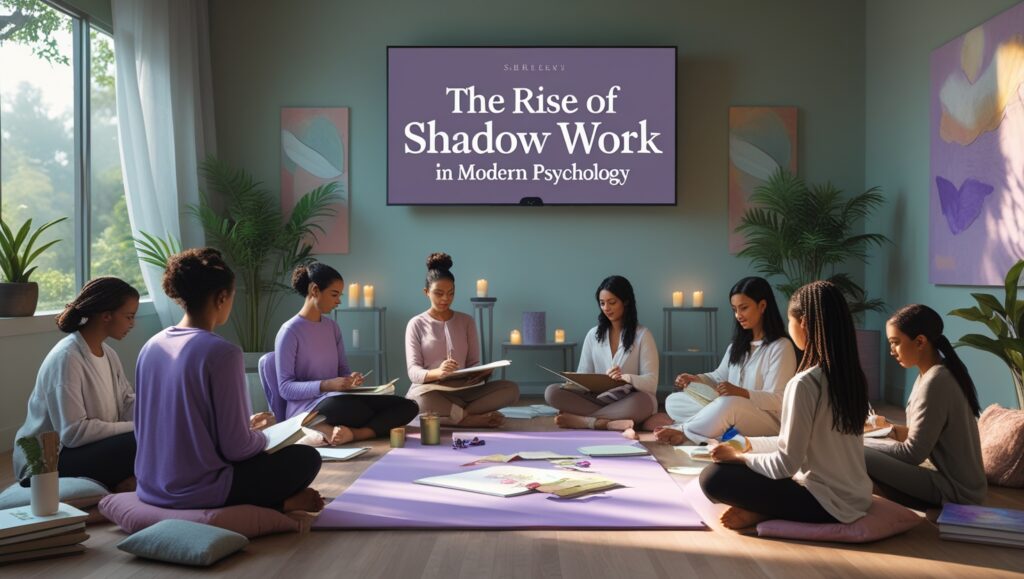
A very interesting and powerful concept has emerged in modern psychology, which is called shadow work. This idea has emerged from the theories of Carl Jung, where he says that every human being has a shadow self, meaning the feelings or thoughts that we hide, ignore, or suppress due to societal standards. Shadow work means that we come face to face with that hidden part of ourselves. We should understand and integrate it so that we can become more balanced and authentic humans.
In today’s times, when people go through anxiety, trauma, and identity crisis, shadow work has become a way to face those things. This is a journey of self-awareness. It is where we try to understand the feelings of anger, fear, and shame hidden within us. Earlier, people used to suppress these feelings, but now people have started understanding the concepts of emotional intelligence and inner healing. Hence, the importance of shadow work is increasing. In this blog, we will see what shadow work is, how it works, why people are adopting it, which tools are being used, and what challenges can arise in it. Finally, we will know whether it is just a self-help trend or is really a part of a psychological revolution.
What is shadow work?
The real concept of shadow work came from Carl Jung, who said that there is a part inside every human being which he does not accept consciously, meaning such thoughts, feelings, or desires which we find unacceptable or which are against our upbringing or the norms of society, we suppress all of them in our unconscious.
This part is called our shadow. Shadow does not mean only evil, but rather those parts which we deny, but they are the real part of our personality. Shadow work means that we face the suppressed parts, explore them, and integrate them into our lives by understanding them.
This process makes a human being complete. When we stay away from our shadow, it comes out in some other form, like anger, mood swings, self-sabotage, or relationship issues, but when we consciously do shadow work, we feel inner freedom and start understanding our real emotions. This is the process of self-reflection and acceptance. Journaling, meditation, dream analysis, and therapy are used in shadow work.
Its goal is not to fix ourselves but to understand ourselves. This concept was earlier limited to psychoanalysis only, but now people are exploring it for personal development and mental wellness as well. This is a journey of emotional growth and spiritual clarity where a person understands their inner world. Connects with you and appreciates every shade of your personality.
Why Shadow Work Is Gaining Popularity Today:
In today’s time, the concept of shadow work is becoming very popular. There are many reasons behind it. First of all, the reason is that people have become more self-aware now. People have started talking openly about topics of mental health and emotional healing. People do not consider therapy taboo, but consider it a necessity.
The second reason is the influence of social media, where people share their personal experiences and recommend tools for self-growth, like shadow work.
The third reason is that in today’s fast-paced lifestyle, anxiety, depression, and burnout have become common, and people are realizing that real peace comes from within.
To achieve this, it is necessary to face your inner self. Shadow work has become an effective method in this process. People want to not only look good on the surface level but also be healed from within. This is why the trend of shadow work is gaining momentum. Apart from this, spiritual communities and self-help coaches are also promoting this concept and encouraging people to face their hidden feelings. People have started to understand that real happiness and inner peace are not possible unless they face their inner pain, guilt, or suppressed emotions. Therefore, shadow work is no longer just a psychological theory but has become a modern lifestyle tool. Every person is exploring in their way.
Practical Techniques Used in Shadow Work:
There are many practical techniques used in Shadow work through which a person can reach their unconscious thoughts and feelings. The most common and accessible way is journaling. When you write your emotions without filtering, your subconscious patterns start coming to the fore. Especially prompts like what do I fear the most or what am I angry with myself for. By writing this, you can identify your shadow aspects. Another way is dream analysis because our dreams are often a reflection of our shadow.
Dreams coming in dreams are similar to Jung’s. The symbols or characters in these represent our repressed emotions. The third way guided is meditation or inner child healing, where you connect with your smaller version, which you have never understood or loved.
Apart from this, visualization exercises and mirror work are also used, where you have a direct conversation with yourself. Some people also use creative arts like drawing or dance therapy so that they can express their emotions without words. Patience and honesty are important in shadow work, as this process can be uncomfortable at times, but if you practice it regularly and do this work in a safe space, then it can be of great help to you in self-awareness and emotional balance.
Challenges and Misconceptions of Shadow Work:
Shadow work has many benefits, but there are some challenges and misconceptions in this process, which are very important to understand.
The first challenge is that when you face your repressed or uncomfortable feelings, you feel emotional discomfort or anxiety. Many people think that shadow work is just a process full of negative thoughts, but in reality, it is a journey of growth and acceptance.
The second misconception is that people think that they will deal with their shadow in just one or two sessions, while in reality, it is an ongoing and layered process.
The third challenge is that if someone gives guidance, if one does shadow work without a shadow, one may become overwhelmed or confused.
Therefore, it is better to seek support from a therapist or a trained facilitator. Some people are not ready to face the pain again while going through their past trauma. Therefore, it is important to ensure readiness and emotional safety. Another misconception is that shadow work means that there is some problem in the human being.
Whereas in reality, every person has a shadow inside them, and exploring it is a sign of self-awareness. The most important thing in this process is to trust yourself and accept each stage with compassion because healing is not linear, and every person’s experience is unique.
Conclusion:
The real purpose of shadow work is not to fix ourselves but to understand and accept every aspect of ourselves. Through this process, we listen to that voice within us that was suppressed at some point in time, whether it is anger, sadness, or guilt. Shadow integration means that we accept both our positive and negative aspects together, which makes our personality complete and authentic. When a person connects with his shadow, he makes his decisions with more clarity, honesty comes in relationships, and a deeper purpose of life is felt in today’s superficial world.
Where everyone tries to look perfect, shadow work reminds us that our real strength lies in understanding our flaws and darkness When we integrate our shadow, we become emotionally resilient and make friends with ourselves This process can be uncomfortable, but it results in inner peace and self-trust Shadow work is a journey where you see and accept yourself in a new way This is not just a part of psychology but a soulful journey that is important for every person if he wants to achieve the truth and wholeness within himself.
FAQs:
1. What exactly is shadow work in psychology?
Shadow work is the process of exploring and integrating the hidden or repressed parts of our personality, known as the “shadow.” Based on Carl Jung’s theory, the shadow represents emotions, desires, or traits we suppress because they are socially unacceptable or uncomfortable. Shadow work involves self-reflection, acceptance, and emotional integration to create a more balanced and authentic self. It’s not about fixing what’s broken, but understanding what’s been ignored.
2. Why is shadow work becoming so popular today?
Shadow work is gaining traction because people are more self-aware and open about mental health. Modern lifestyles are full of anxiety, burnout, and emotional disconnection, and people are turning inward to find real peace. Social media, therapy-friendly culture, and spiritual communities are encouraging inner healing practices. More individuals now seek to heal from within, rather than just maintaining a perfect appearance on the outside.
3. What are the most common techniques used in shadow work?
Popular shadow work techniques include journaling, dream analysis, guided meditation, inner child healing, and mirror work. Journaling helps uncover subconscious patterns, while dream analysis decodes symbols of repressed emotions. Inner child work connects us to unresolved feelings from childhood. Other creative methods, like art, dance, or visualization, also help people express unspoken parts of themselves. Honesty and consistency are crucial throughout the process.
4. What challenges or misconceptions come with shadow work?
A common challenge is emotional discomfort; facing painful memories or uncomfortable truths can trigger anxiety or sadness. A major misconception is that shadow work is negative or quick to complete. In reality, it’s a gradual and sometimes lifelong process. Another mistake is doing it without guidance, which can lead to confusion or emotional overwhelm. Some also believe only “damaged” people need it, but everyone has a shadow, and exploring it reflects emotional maturity.
5. Is shadow work just a trend or a true psychological transformation tool?
Though popularized through social media and self-help culture, shadow work is far more than a trend. It’s rooted in deep psychological theory and is now seen as a powerful tool for emotional healing and personal development. It allows people to connect with their true selves, improve relationships, and live with purpose. Shadow work encourages self-acceptance, emotional resilience, and wholeness, making it a transformative practice in both therapy and personal growth.